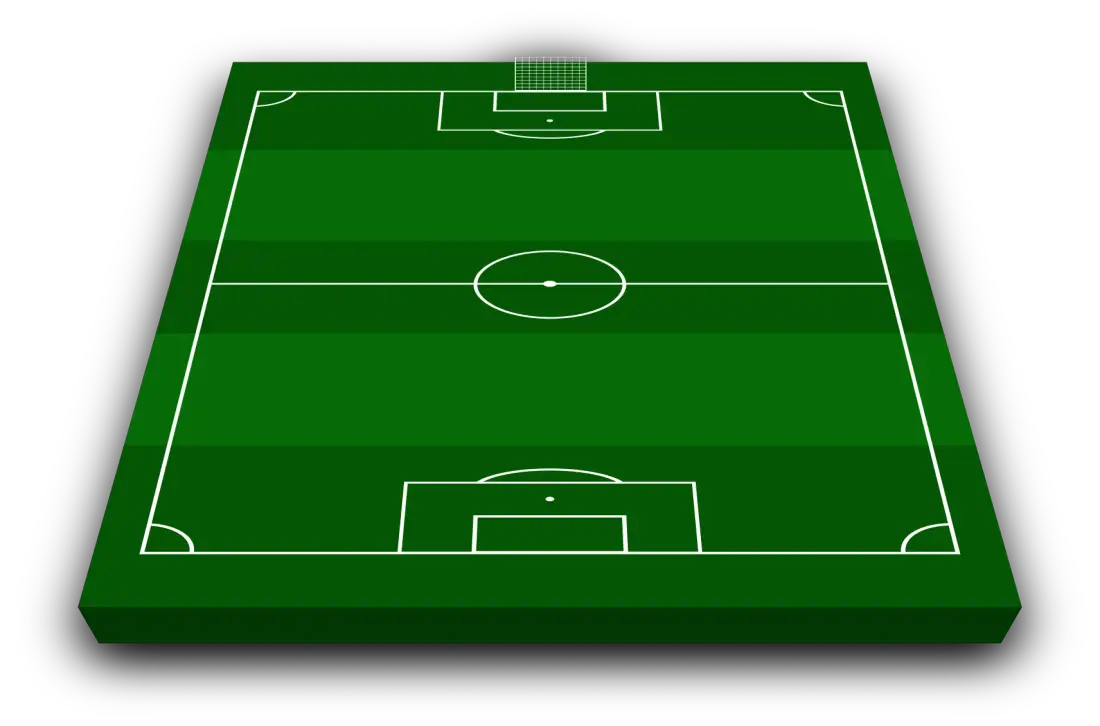
9-a-Side Lineup Builder
Build your 9-a-side lineup in the tool above. Pick a 9v9 formation, place your eight outfield players and the keeper, and type their names. The finished team sheet downloads as an image you can send to the group before kick-off. Free, works on a phone, no account.
9v9: the step between seven and eleven
In youth football, nine-a-side arrives at under-11. In England the FA sets 9v9 for both age groups, and US youth associations such as Cal South use it for the same ages. It is a bridge format. The back two of seven-a-side becomes a back three or four, and midfield gets a proper line of its own.
The pitch grows with it. The FA recommends 80 x 50 yards with 7 x 16 foot goals, far bigger than a small-sided cage and still well short of a full-size pitch. Use the extra width; a team that stays narrow wastes it.
9-a-side formations in the builder
- 3-3-2: three defenders, three midfielders, two strikers. Every line has cover, which makes it the easiest shape to teach and a sensible default.
- 3-2-3: two central midfielders behind a front three. Built for teams with quick wide forwards, and it leaves the middle thin if the wingers stop tracking back.
- 4-3-1: a back four, the same one players will use at eleven-a-side. Solid, but the lone striker needs midfield runners to join in.
- 3-4-1: a four-player midfield whose wide men do the work of wing-backs. Good for controlling possession.
- 2-3-3: two at the back and six going forward. Use it to chase a game, not to start one.
Roles and rotation
Nine players is enough for real positions, so give each one a job rather than a zone. The centre-back in a back three needs to talk. Wide midfielders in a 3-3-2 cover the whole flank on their own. Where rolling substitutions are allowed, as in Cal South's 9v9 rules, plan the rotation too: decide who plays which half before the game, put the bench in the lineup and nobody has to ask.
Before you download
Set the goalkeeper first, then the defensive line, then work forward. Check that your two best players are not both on the bench at the same time. When it looks right, download the image or copy the link, and if the club has a website you can embed the lineup there with an iframe.
Playing a smaller format? Try the 7-a-side lineup builder or the 5-a-side lineup builder. Moving up to the full game, use the football lineup builder, and the guide to squad sizes by format explains which age groups play which.
Frequently asked questions
How do I make a 9-a-side lineup?
Pick one of the five 9v9 formations in the builder above, drag your eight outfield players and the goalkeeper into position, then type their names. Add the substitutes underneath and download the finished team sheet as an image to send to parents or the squad. It is free, runs in the browser and needs no account.
What is the best formation for 9-a-side?
There is no single best 9v9 formation, but 3-3-2 is a sensible starting point because it puts three players in each of the first two lines. Switch to 3-2-3 if your wide players can attack, or 4-3-1 if you keep conceding. The builder also has 3-4-1 and 2-3-3, so you can compare shapes with the same nine players before match day.
Who plays 9v9 football?
9v9 is the youth format for under-11 and under-12 football in England, where the FA sets it for both age groups. US youth associations use it for the same ages: Cal South's 9v9 rules cover U11 and U12, with eight field players and a goalkeeper. It sits between 7v7 and the full 11-a-side game.
How big is a 9-a-side pitch?
The FA recommends an 80 x 50 yard pitch with 7 x 16 foot goals for 9v9. Cal South's 9v9 rules allow 70 to 80 yards long and 45 to 55 yards wide, with goals no larger than 7 x 21 feet and 6.5 x 18.5 feet recommended.
How many substitutes can a 9v9 team have?
It depends on the league. Cal South's 9v9 rules make substitutions unlimited at any stoppage, and a game cannot start or continue with fewer than six players on a team. In the builder you can add as many substitutes as you need under the starting nine and include them in the image.