The 4-5-1 Formation Explained: Mourinho, Makélélé, and the Art of Defensive Football
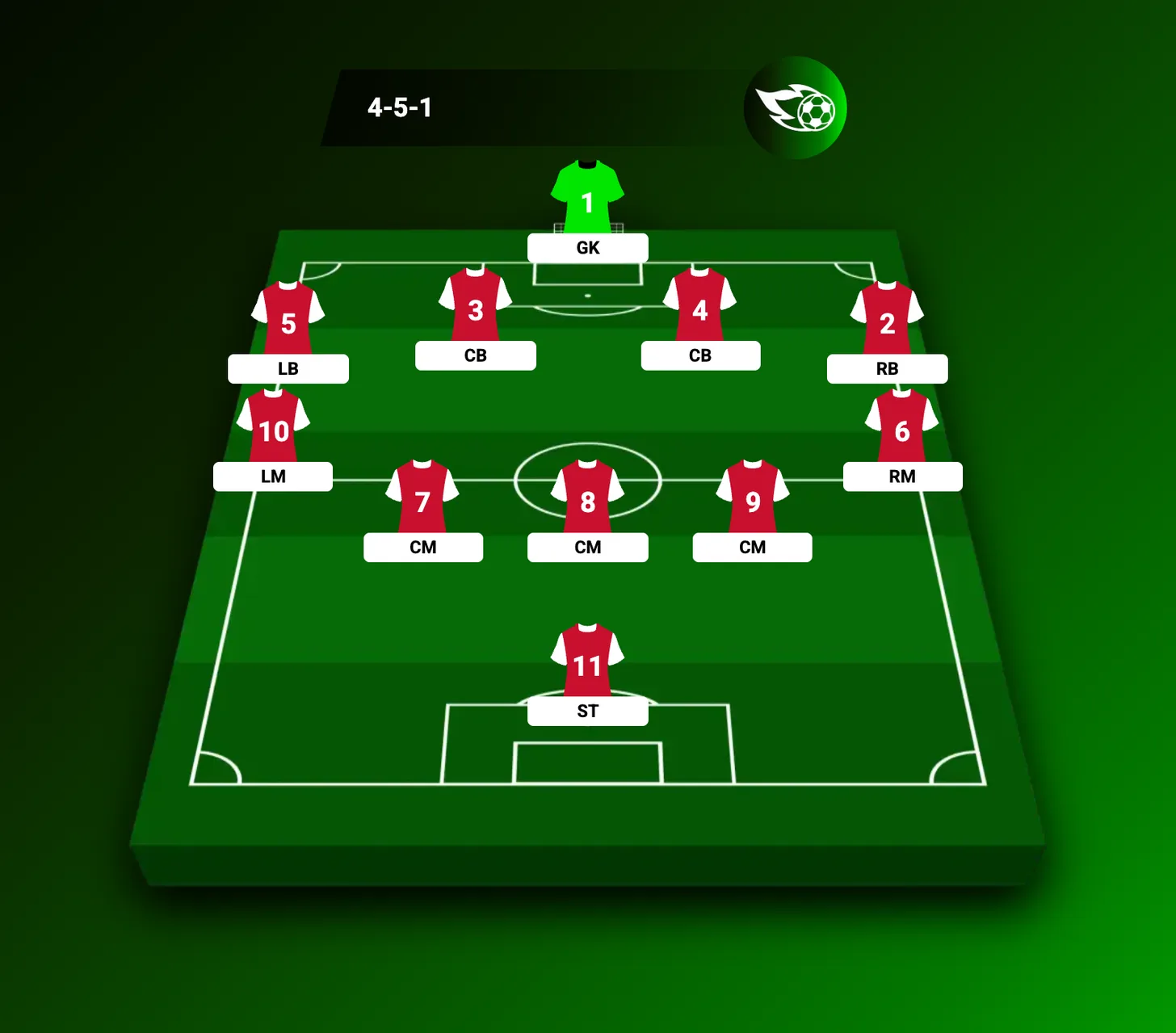 Five in midfield, one up front. The 4-5-1 is built to win the middle of the pitch by weight of numbers and then hit an opponent who has committed too many players forward. It is not much fun to watch, and it has produced some of the most statistically dominant defensive seasons in football.
History
The 4-5-1 comes from the same family as the 4-3-3, which reached prominence through Brazil's 1958 World Cup winners and the 4-2-4 that preceded it. European coaches wanting something more cautious pulled the wide forwards back into a flatter midfield line, and what was left was a 4-3-3 that had traded final-third width for central control.
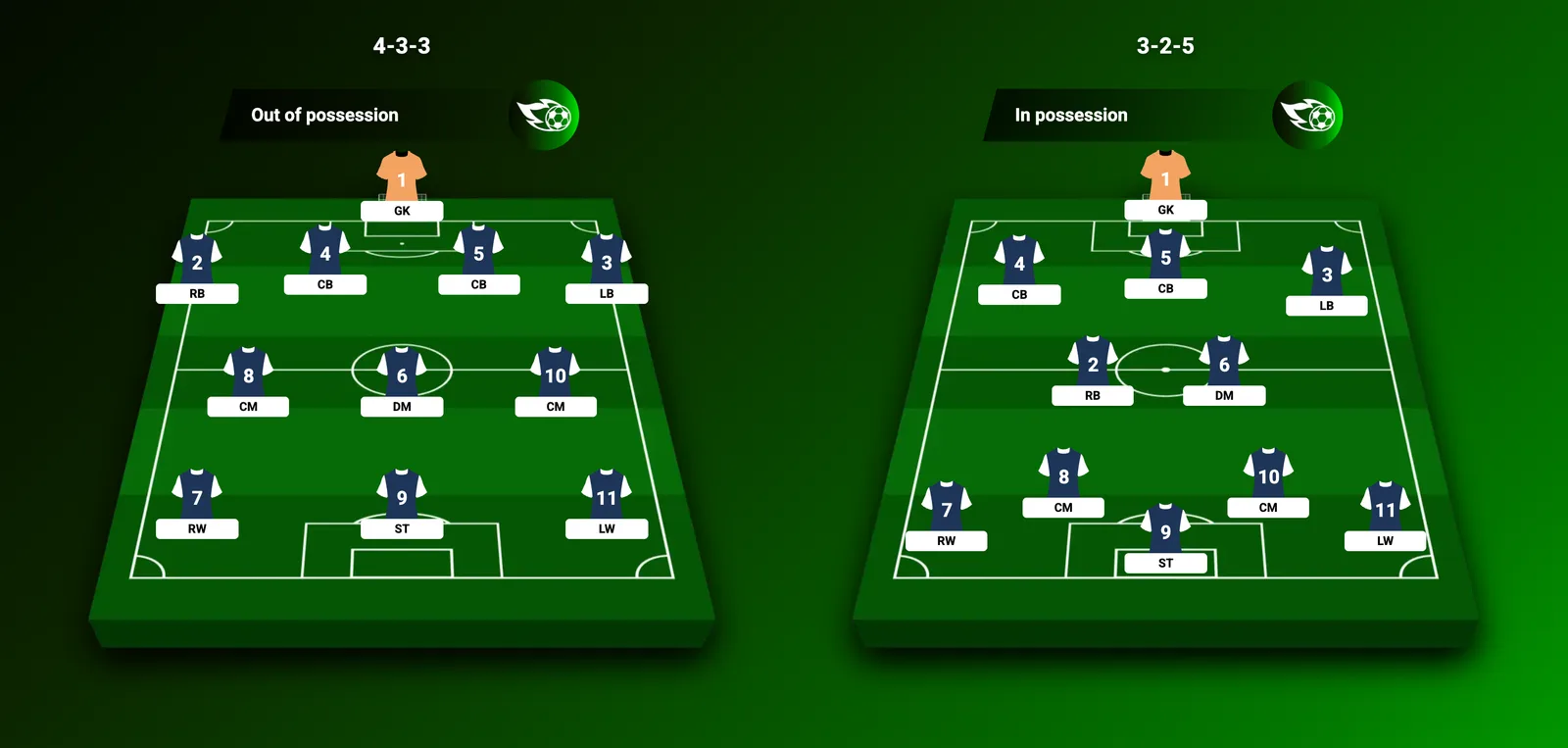
Its most famous version arrived in the mid-2000s Premier League. José Mourinho's Chelsea is usually described as a 4-3-3, and in possession it was, but out of possession the wide attackers dropped into a flat bank of five and the team suffocated whoever it was playing. That season produced the most defensively dominant campaign English football has recorded.
The three lines
Four defenders, two centre-backs and two full-backs, in a conventional back line. Five midfielders: a holding player, two central or box-to-box midfielders, and two wide midfielders who sit close to the central trio rather than hugging the touchline. One striker.
Those two wide midfielders are the whole distinction. In a 4-3-3 they stay high and wide. Here they tuck in alongside the central three and complete an almost unbroken wall of five across the pitch, which closes every central passing lane and concedes the flanks on purpose. Possession given away out wide rarely turns into a clear chance, and that is the bet the formation makes.
How it works
The back four defends zonally and benefits enormously from what is in front of it. Centre-backs rarely face direct central passes, because the holding midfielder screens that lane. Full-backs can stay conservative, because the wide midfielders are covering rather than sprinting forward.
Midfield is where the system actually lives. The holding midfielder sits just ahead of the back four to break up play and set the tempo, which is the role Claude Makélélé made famous at Chelsea. His positional reading alone changed how English football thought about the job. The two central midfielders work box to box and link defence to attack, and the two wide players track back to complete the five, breaking forward only when there is something to break forward for.
The striker plays alone against two centre-backs and has to be built for it. Service arrives sporadically, so holding the ball up, bringing runners into play and finishing the few chances that come are all part of the same job. Didier Drogba is the profile: power and finishing in one player.
Advantages
Midfield domination is the first, and it is simple arithmetic. Five players in the middle make it hard for any opponent to find rhythm, including one playing three central midfielders.
Defensive solidity follows from that, since the extra central body keeps the back four compact and rarely exposed to direct central passes, which is why teams using this shape post unusually low goals-conceded totals. Control of tempo comes with the same numbers: a team that outnumbers you in midfield can slow the game down when it is ahead, speed it up when it needs to chase, and decide for itself which of those two games is being played.
The counter-attack is built in. The midfield five wins the ball back often and reasonably high up the pitch, and a quick transition into the striker catches teams before they have reorganised.
Disadvantages
The striker is isolated by design, and against two centre-backs over ninety minutes that wears him down; if the midfield is prioritising defence, he barely sees the ball at all. Width disappears alongside him, because wide midfielders tucking inside means nothing is stretching a deep-defending opponent, which makes breaking down an organised low block genuinely difficult.
Fewer chances follow from both. Five defensive-minded midfielders instead of a second striker or an advanced playmaker means fewer clear-cut opportunities per game, and that is the price of the control.
The last one is specific. Everything runs through the holding midfielder, so if he is drawn out of position or man-marked properly, one well-timed pass bypasses the entire screen.
How opponents beat it
Attack the space the tucked-in midfielders have left. Pushing full-backs high and wide forces the opposing full-back into an isolated duel, because the wide midfielder is busy in the centre.
The second route runs behind the holding midfielder, through the half-spaces between full-back and centre-back, or by dropping a false nine deep to pull a centre-back out of the block and open the lane behind him.
There is also a squad-level answer. Because the lone striker is not much of a threat on his own, an opponent can commit an extra man to midfield without worrying about being outnumbered at the back.
When teams pick it
Against technically better possession sides, where the extra midfielder is what stops central combination play. In away fixtures and second legs, where protecting a result matters more than the performance. When a squad has one reliable target man and no second striker worth forcing into the team. And as an in-game change, since adding a midfielder to shift into a 4-5-1 is one of the most common ways to see out a lead.
Real-world examples
José Mourinho's Chelsea in 2004-05 is the reference. Makélélé shielded the back four while Damien Duff and Arjen Robben tucked in from wide to complete the five out of possession, with Drogba leading the line. Chelsea won the title with 95 points, a record at the time, conceded 15 goals across the season, still the fewest in a Premier League campaign, and kept 25 clean sheets. The Chelsea lineup builder has the current squad, if you want to try the Makélélé screen with today's midfield.
Beyond that, the 4-5-1 has become the standard control shape for mid-table and underdog sides across the Premier League, Serie A and La Liga when they face stronger possession teams. It minimises central risk and keeps a genuine outlet up front, which is usually all such a team is asking for.
Spotting it while watching
Count the bodies in the middle third when the team does not have the ball. Five, not four, occupying the central and half-space areas is the tell.
Then check whether the wide players tuck in or hold the touchline, and look for one midfielder consistently stationed just ahead of the centre-backs. And watch the striker. A forward repeatedly chasing long balls or holding off two defenders with nobody arriving is a 4-5-1 seen from the loneliest position on the pitch.
Related formations
For a broader look at every system teams use, see our full guide to every formation, or you can build your own with our lineup builder and try it out on the pitch.