The 5-4-1 Formation Explained: How Rehhagel's Greece Shocked Europe
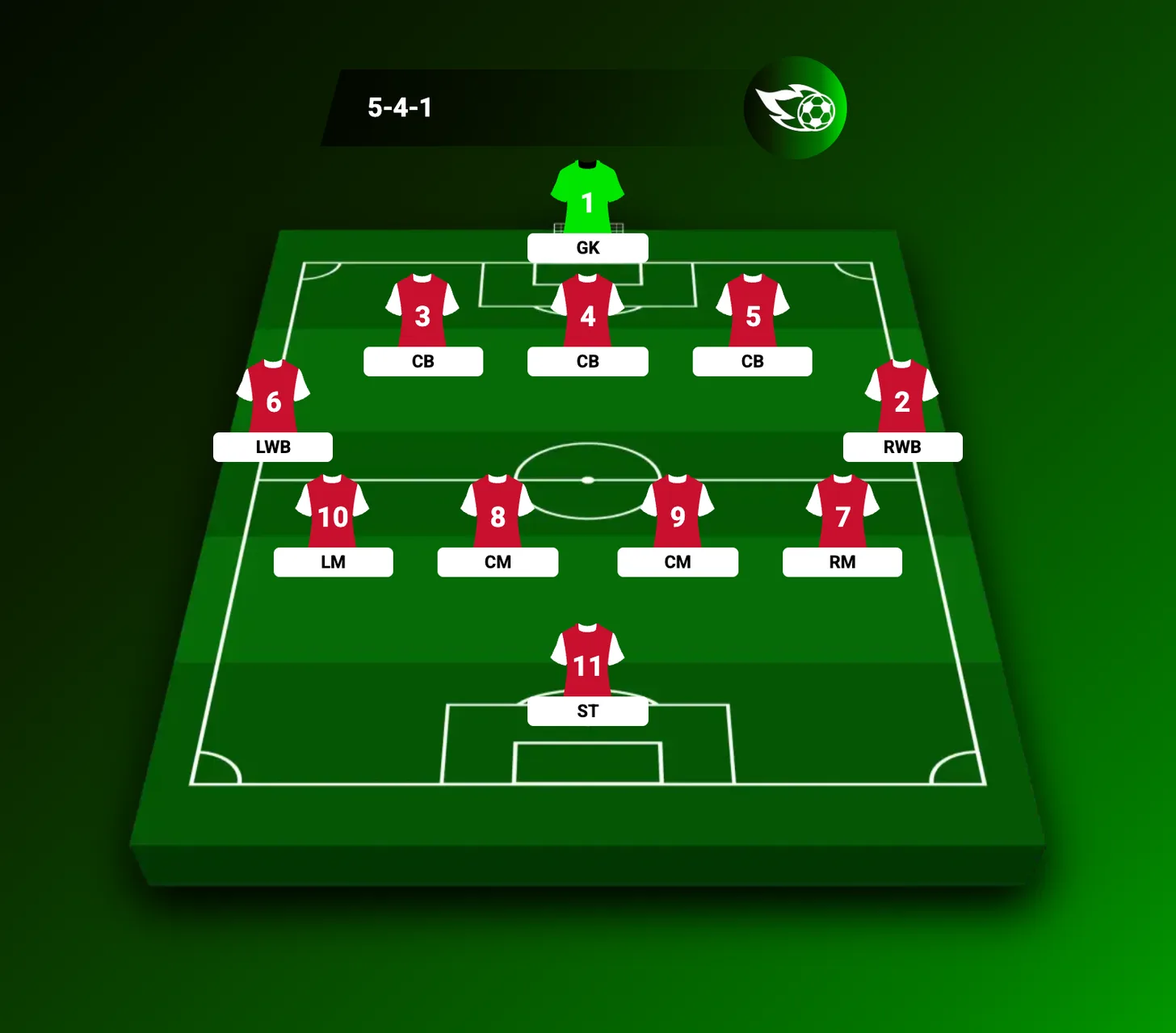 Nine outfield players behind the ball, one striker waiting for scraps. The 5-4-1 is the most defensively fortified shape in football, it is rarely pretty, and it has won a European Championship.
History
The lineage runs back to catenaccio, the deep line and sweeper that Italian football used through the middle of the twentieth century to frustrate better opponents. When three-at-the-back systems with wing-backs spread across Europe in the 1990s, some coaches simply pushed both wing-backs down into the defensive line and put four across midfield, which produced the most conservative version of a back five available.
Euro 2004 is the moment the shape became famous. Otto Rehhagel took Greece into the tournament as 150-1 outsiders and out of it as champions, playing a 5-4-1 for most of the competition. He remains the only foreign manager to have won the European Championship, and he did it with a squad built on defensive organisation, set-piece threat and ruthless game management rather than attacking talent.
The three lines
Five defenders: three central defenders and two wing-backs who sit deep rather than pushing on. Four midfielders: two central and two wide, in a compact bank. One striker, usually isolated, whose job is as much about occupying defenders and winning set pieces as scoring.
Density is the identifying feature. Nine players behind the ball for most of a match makes this arguably the hardest formation in football to break down in open play. Rehhagel's Greece added catenaccio-style man-marking and a disciplined offside trap on top, denying space rather than contesting possession, and looked to score from set pieces and the occasional counter.
How it works
The back five is built for containment and nothing else. Three central defenders mark tightly and rarely step out. The wing-backs sit alongside them instead of advancing, so the team defends with a genuine five even though two of those players are nominally wing-backs. Greece's record at Euro 2004 came out of that discipline, plus a coordinated deep line and constant use of the offside trap.
The midfield four sits in a tight bank just ahead of them, closing passing lanes and pressing to win the ball rather than trying to keep it. This asks for a very specific type of player: energetic, obedient, able to track back for ninety minutes without the reward of ever attacking. Rehhagel built his entire squad around that profile and wore down technically better teams with it.
The striker plays closer to a target man or a set-piece weapon than a goalscorer, because service from a team this deep is limited by design. Angelos Charisteas is the perfect illustration. His height made him a permanent aerial threat, and his headers won both the quarter-final against France and the final against Portugal.
Advantages
Maximum defensive coverage is the obvious one. Nine players behind the ball smother space centrally and out wide, and open play stops producing chances.
Set pieces cut both ways in your favour. All those bodies make the box hard to attack from a corner, and a well-drilled side can send the same bodies forward on its own set pieces.
Protecting a result is what the shape is for. A team can absorb sustained pressure for long spells, frustrate a better opponent, and wait for one moment.
There is also a quieter benefit: individual errors matter less. With that much cover, one player's mistake usually has a teammate positioned behind it.
Disadvantages
The striker is isolated to a degree that goes beyond other lone-forward systems. One player against five defenders, with no midfield support arriving, cannot hold the ball up, so possession comes straight back.
Open-play threat is close to zero. Goals come from set pieces, individual moments, and rare counters, and if none of those arrive, none arrive.
Passivity is the trap. Drop too deep for too long and the opponent simply camps in the final third until the weight of possession and shots finds a gap.
And momentum is hard to change. So many players are committed to defending that adding attacking impetus mid-match means restructuring the team rather than adjusting it.
How opponents beat it
Patience rather than speed. Wide overloads are the most reliable route: because the wing-backs sit deep and narrow, committing a full-back and a winger against each one creates repeated two-against-one situations that stretch the block until crossing lanes open.
Fast circulation across the full width of the pitch works on the same principle, forcing the bank of nine to shift over and over until a gap appears between the lines.
There is also a free advantage on the ball. Since the lone striker presses very little, an opponent can build patiently from the goalkeeper and centre-backs, drawing the block a few metres higher before playing in behind. And because a deep block concedes shots from distance in exchange for protecting the box, set pieces and long-range efforts are worth more than usual.
When teams pick it
As a heavy underdog in a knockout tournament, where it is the classic equaliser against a better squad. When protecting a narrow lead late, which makes shifting into a 5-4-1 one of the most common in-game changes in football. Away from home against a stronger side, when a point is an acceptable result. And when a squad's genuine strengths are defensive organisation and an aerial threat up front.
Real-world examples
Greece at Euro 2004 is the whole case. They arrived at 150-1, beat host nation Portugal in the opening match, then knocked out the reigning champions France and a strong Czech Republic side, and beat Portugal again 1-0 in the final. Charisteas scored the decisive headers in the quarter-final and the final. Greece conceded no goals at all in the knockout stage, which came out of Rehhagel's 5-4-1 and the work rate of the midfield four.
The template has been borrowed constantly since: deep defensive discipline, a compact and energetic midfield, and a physical target man for set pieces. Underdogs in major tournaments keep reaching for it, because it keeps working often enough to be worth the ninety minutes of suffering.
Spotting it while watching
Count everyone behind the ball. Nine outfield players back with one forward high up the pitch is a 5-4-1 and nothing else.
The striker chasing long balls with no support arriving is the same tell from the other end. After that, watch how rarely the wing-backs advance, because that is what separates this from a 5-3-2 or a 3-5-2. And watch the set-piece routines, which tend to be unusually well rehearsed in teams that know they will not create much from open play.
Related formations
For a broader look at every system teams use, see our full guide to every formation, or you can build your own with our lineup builder and try it out on the pitch.